Tag: #WomensRights

  • [Opinion] Chhattisgarh High Court Judgment on Marital Rape: A Legal and Societal Perspective

    [Opinion] Chhattisgarh High Court Judgment on Marital Rape: A Legal and Societal Perspective

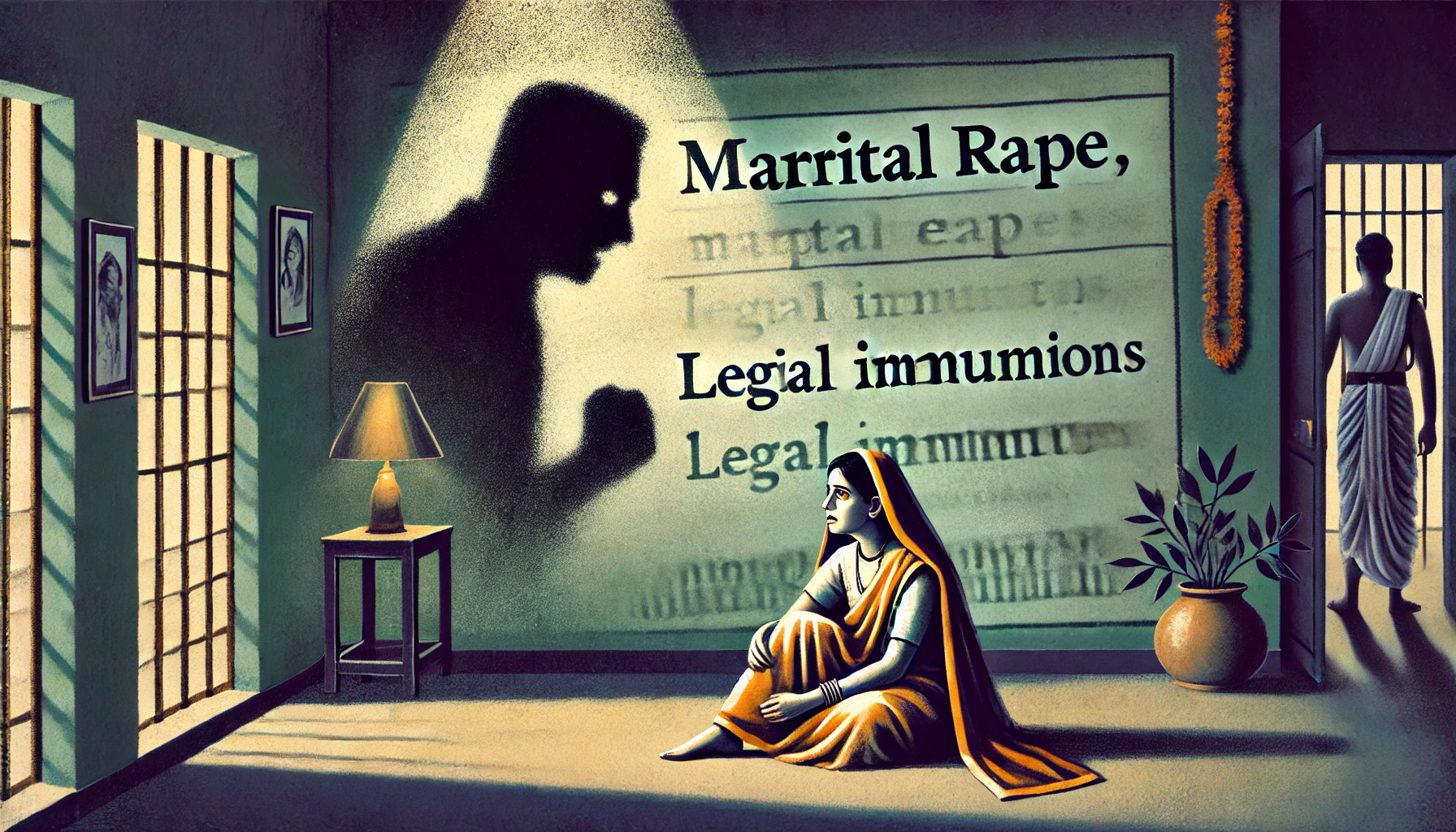
    The Chhattisgarh High Court’s recent ruling acquitting a man of rape and unnatural sex charges against his wife has reignited the debate surrounding marital rape laws in India. While the verdict may seem harsh to many, it is essential to analyze it within the framework of existing legal principles, societal structures, and the philosophy behind marriage laws in India. This article presents a defense of the court’s ruling, highlighting the legal and socio-cultural justifications that support its correctness.

    1. The Legal Framework: Understanding the Judgment

    The Chhattisgarh High Court’s decision is rooted in the existing provisions of the Indian Penal Code (IPC), particularly Exception 2 of Section 375, which states that a husband cannot be prosecuted for raping his wife if she is above 15 years of age. Although the Supreme Court in Independent Thought v. Union of India (2017) raised the age to 18 in the context of child marriage, the larger issue of marital rape remains unrecognized under Indian law.

    The court also relied on Section 377, which criminalizes unnatural sex but does not explicitly address whether a husband can be prosecuted for such acts against his wife. Given that Section 375 already provides immunity to husbands, the High Court logically extended this immunity to unnatural sex as well, reinforcing the idea that a husband cannot be criminally prosecuted for acts of a sexual nature within marriage.

    While some may argue that this interpretation contradicts evolving views on women’s rights and consent, courts are bound by the law as it stands. The judiciary cannot create new laws or override established legal principles unless they are unconstitutional. The judge, therefore, correctly adhered to the existing legal framework rather than legislating from the bench.

    2. Marital Rape Exception: A Pillar of Indian Law

    The marital rape exception is not a mere legal loophole but a deliberate legal principle embedded in Indian law. Historically, marriage has been seen as a sacrament in India, implying that spouses owe each other certain duties, including conjugal rights. The rationale behind this exception is that marriage creates an implicit and ongoing consent to sexual relations, except in cases of cruelty, domestic violence, or extreme abuse covered under other provisions of law.

    a. Social and Cultural Context of Marriage in India

    Unlike Western societies where marriage is seen as a contractual arrangement between individuals, Indian marriages are deeply rooted in tradition, religious customs, and familial expectations. The idea that marriage implies an expectation of sexual relations is deeply ingrained in social norms. While a wife certainly has the right to refuse sex, the criminalization of marital rape would fundamentally alter the foundation of marriage as understood in Indian society.

    Additionally, India has historically viewed marriage as a stabilizing institution, preventing social disorder and ensuring familial harmony. Introducing a broad marital rape law could destabilize marriages, leading to an increase in litigation, false accusations, and unnecessary criminalization of domestic disputes.

    b. Potential for Misuse and False Cases

    One of the strongest arguments against criminalizing marital rape is the potential for misuse. India already has laws such as Section 498A IPC (cruelty against a wife), which have often been misused to harass husbands and their families. The Supreme Court itself has acknowledged that many cases under Section 498A are filed with ulterior motives, leading to wrongful arrests and legal harassment.

    If marital rape is criminalized without strict safeguards, there is a high probability of false allegations. Unlike cases of stranger rape, marital rape cases inherently involve a lack of third-party witnesses, making it difficult to establish the truth. This could lead to an increase in frivolous cases where accusations are made in the heat of domestic conflicts, with no way for the husband to defend himself adequately.

    3. Legal and Practical Challenges in Criminalizing Marital Rape

    a. Defining “Consent” in Marriage

    A key problem in recognizing marital rape as a crime is the difficulty of defining consent in the context of an ongoing marital relationship. In casual or non-marital relationships, consent is sought each time before engaging in sexual activity. However, in a marriage, consent is presumed unless explicitly withdrawn. Would every instance of sex in marriage require explicit verbal consent? If so, how would this be legally enforced?

    The problem of distinguishing between “marital rape” and a routine domestic disagreement over sex is extremely complex. In many cases, what one partner perceives as coercion, the other may perceive as a normal aspect of marital intimacy. Criminalizing such acts would create confusion and lead to unnecessary legal disputes.

    b. The Impact on Marital Relations

    Marital rape laws, if enacted without careful thought, could disrupt marital relationships beyond repair. Marriage is not only a legal contract but also an emotional and physical bond. The constant fear of legal repercussions could negatively affect intimacy and trust between spouses. A husband may hesitate to initiate intimacy due to the fear that any disagreement could lead to a criminal complaint.

    Furthermore, in Indian society, where marriage is often a union of families, such laws could lead to increased interference from external parties, further complicating marital relationships.

    c. Existing Protections Against Marital Abuse

    It is important to recognize that Indian law already provides several legal remedies for women facing sexual violence in marriage. The Protection of Women from Domestic Violence Act (2005) allows women to seek legal action against their husbands for sexual abuse, mental harassment, and other forms of domestic violence. Additionally, under Section 498A IPC, women can take legal action against husbands for cruelty, which includes acts of physical and sexual abuse.

    Rather than criminalizing marital rape, strengthening these existing laws and ensuring their proper implementation would be a more effective approach.

    4. The Role of the Legislature vs. Judiciary

    The Chhattisgarh High Court’s ruling aligns with the principle that legal changes must come through the legislature, not the judiciary. Courts cannot override the will of Parliament by creating new laws through judicial activism.

    If marital rape is to be criminalized, it must be done through a well-debated, carefully drafted legislative process that takes into account the cultural, social, and legal implications. Parliament, as the representative body of the people, is better suited to evaluate the broader consequences of such a law.

    5. International Comparisons and the Indian Context

    Many critics argue that since most Western countries have criminalized marital rape, India should follow suit. However, direct comparisons between Western legal systems and India are flawed due to the stark differences in cultural values, social structures, and marriage institutions.

    For instance, in countries like the U.S. and the U.K., marriage is primarily seen as a legal contract that can be easily dissolved. In contrast, in India, marriage is a lifelong commitment with significant social and familial responsibilities. The Western model of marriage is not directly applicable to Indian society, where divorce still carries stigma, and marital stability is prioritized over individual autonomy.

    6. Balancing Women’s Rights with Societal Stability

    While the concerns of women’s rights activists regarding sexual autonomy are valid, the issue is not as black-and-white as it seems. Striking a balance between protecting women from genuine sexual violence and preventing unnecessary criminalization of marriage is crucial.

    Instead of outright criminalization, alternative approaches such as counseling, mediation, and civil remedies could be explored. Making marital rape a crime could lead to unintended negative consequences, including breaking families apart, increasing litigation, and harming children caught in the middle of marital disputes.

    Conclusion: A Legally Sound and Socially Pragmatic Judgment

    The Chhattisgarh High Court’s judgment is not a dismissal of women’s rights but a reaffirmation of the existing legal framework. Until Parliament explicitly criminalizes marital rape, courts must adhere to the law as it stands.

    While protecting women from sexual violence is essential, a hasty criminalization of marital rape could create legal chaos and disrupt the social fabric. Strengthening existing laws, promoting awareness, and ensuring proper implementation of domestic violence protections would be a more pragmatic approach.

    The debate on marital rape in India must be nuanced, considering not only legal principles but also cultural realities, the potential for misuse, and the broader implications on marriage as an institution. Rather than rushing to criminalize marital rape, India must find a balanced approach that protects victims while maintaining the sanctity of marriage.

    Gorakhnth Sharma vs. State of Chhattisgarh [10.02.2025] in CRA No. 891 of 2019 with neutral citation [2025:CGHC:7365]

  • Husband Walks Free: Chhattisgarh HC Verdict Reignites Marital Rape Debate!

    Husband Walks Free: Chhattisgarh HC Verdict Reignites Marital Rape Debate!

    Introduction

    The recent Chhattisgarh High Court judgment in which a husband was acquitted of charges under Sections 376 (rape), 377 (unnatural sex), and 304 (culpable homicide) of the Indian Penal Code (IPC) has sparked intense debate regarding marital rape and the legal framework governing spousal sexual relations in India. The court’s reliance on Exception 2 under Section 375 IPC, which exempts husbands from being charged with raping their wives, has once again highlighted the legal vacuum surrounding marital rape. The judgment also raised concerns regarding the interpretation of unnatural sex within a marital context.

    This article critically analyzes the implications of this judgment, juxtaposing it against recent legal developments, international perspectives, and the ongoing debates surrounding marital rape criminalization in India.

    Background of the Case

    The case involved a 40-year-old man who allegedly engaged in forceful and unnatural sexual intercourse with his wife, causing severe injuries that ultimately led to her death. The prosecution argued that the husband inserted his hand into his wife’s anus, leading to peritonitis and rectal perforation, resulting in her demise. The trial court convicted the husband and sentenced him to ten years of rigorous imprisonment. However, the Chhattisgarh High Court overturned this conviction, reasoning that marital rape is not a recognized offense under Indian law and that unnatural sex within marriage does not constitute a punishable offense.

    Legal Framework: Marital Rape Exception and Section 377 IPC

    Marital Rape Exception Under Section 375 IPC

    Section 375 IPC defines rape but provides an exception stating that sexual intercourse by a man with his wife (provided she is above 15 years of age) does not constitute rape. This exception, commonly referred to as the “marital rape exception,” has been a subject of intense legal and societal discourse. The Supreme Court of India, in the Independent Thought v. Union of India (2017) case, raised the age of consent for married women to 18 years, but it did not remove the exemption entirely.

    In contrast, most countries have criminalized marital rape, recognizing the right of a wife to bodily autonomy and consent within marriage. The United Nations and various human rights organizations have repeatedly called for the abolition of marital rape exemptions worldwide. However, in India, the legal system still provides immunity to husbands in this regard.

    Unnatural Sex Under Section 377 IPC

    Section 377 of the IPC, before being partially struck down in Navtej Singh Johar v. Union of India (2018), criminalized any form of non-peno-vaginal intercourse, including consensual acts between adults. The Supreme Court ruling decriminalized consensual homosexual relations but did not explicitly address the status of non-consensual unnatural sex within marriage.

    The Chhattisgarh High Court held that if rape itself is not an offense within marriage, then unnatural sex between a husband and wife cannot be considered an offense under Section 377. This reasoning suggests that marital relationships override individual consent in sexual acts, which raises grave concerns regarding bodily integrity and personal dignity.

    Judicial Reasoning and Its Implications

    The High Court’s judgment is based on a literal interpretation of the law rather than an evolving jurisprudential approach. Some key points raised in the judgment include:

    1. Marital Consent is Irrelevant Under Indian Law: The judgment reiterates that under Indian law, consent is immaterial for sexual intercourse within marriage, which further reinforces the legal subjugation of married women.
    2. Inconsistency with Supreme Court Rulings: The court’s reliance on the age limit of 15 years is contradictory to the Supreme Court’s ruling in Independent Thought (2017), which clearly set the age of consent at 18 years.
    3. Lack of Consideration for Bodily Harm: While the judgment acknowledges the cause of death as peritonitis and rectal perforation, it disregards the legal consequence of inflicting such grievous bodily harm. Even if marital rape is not recognized, acts causing injury or death should still warrant legal scrutiny.
    4. Reinforcement of Patriarchal Notions: By upholding an outdated legal provision, the judgment reflects a regressive mindset that continues to see wives as property rather than individuals with agency over their own bodies.

    Contrasting Judicial Approaches in India

    The Chhattisgarh High Court ruling starkly contrasts with other high court rulings that have adopted a more progressive stance on marital rape and sexual violence within marriage.

    • Bombay High Court (2023): In a case involving a minor wife, the court held that marital status does not provide immunity if the wife is below the age of 18.
    • Madhya Pradesh High Court (2022): It ruled that unnatural sex within marriage is not rape but acknowledged the physical harm inflicted, allowing for prosecution under other sections.
    • Delhi High Court (2022): A split verdict in a marital rape case reflected the judicial divide, with one judge advocating criminalization and another citing legislative limitations.

    These contrasting judgments indicate that the Indian judiciary remains divided on the issue, awaiting a definitive ruling from the Supreme Court.

    Social and Legal Implications of the Judgment

    1. Erosion of Women’s Rights: This judgment reinforces the notion that marriage grants men unrestrained sexual rights over their wives, undermining the principles of equality and dignity enshrined in the Indian Constitution.
    2. Potential for Increased Violence: By acquitting the accused, the ruling sets a dangerous precedent that could embolden perpetrators of domestic and sexual violence, making legal recourse difficult for victims.
    3. Impact on Ongoing Marital Rape Debate: The judgment underscores the urgent need for legislative intervention to address the marital rape exception and redefine consent in marriage.
    4. International Reputation and Legal Commitments: India, as a signatory to international human rights conventions, faces scrutiny for upholding archaic marital rape exceptions, potentially affecting its global standing on gender rights.

    Future Legal and Policy Considerations

    • Legislative Amendments: The Bharatiya Nyaya Sanhita (BNS), which replaced the IPC in 2024, continues to retain the marital rape exception. A legislative review is necessary to align with contemporary human rights standards.
    • Judicial Clarifications: A Supreme Court ruling on pending petitions regarding marital rape criminalization could provide a uniform legal stance.
    • Awareness and Societal Change: While legal changes are essential, societal attitudes towards marriage, consent, and women’s rights must evolve to ensure effective implementation of legal protections.

    Conclusion: A Balanced Perspective on Marital Rape Exception

    While the Chhattisgarh High Court’s ruling has been widely criticized, it also brings to light the complexity of criminalizing marital rape in the Indian socio-legal context. Opponents of marital rape criminalization argue that stringent rape laws within marriage could be misused, potentially leading to an increase in false cases and destabilizing family structures. They emphasize the importance of a nuanced approach that considers cultural and legal realities while ensuring justice for victims of spousal sexual violence.

    On the other hand, the judgment undeniably exposes the urgent need for reform in India’s legal framework to recognize marital rape as a punishable offense. A balanced approach that protects genuine victims while preventing misuse of laws is essential for achieving gender justice. Ultimately, the law must evolve to uphold the dignity and autonomy of all individuals, irrespective of their marital status.

    Gorakhnth Sharma vs. State of Chhattisgarh [10.02.2025] in CRA No. 891 of 2019 with neutral citation [2025:CGHC:7365]

  • [Critical Analysis] Chhattisgarh High Court Acquits Man Accused of Unnatural Sex with Wife

    [Critical Analysis] Chhattisgarh High Court Acquits Man Accused of Unnatural Sex with Wife

    Introduction

    The Chhattisgarh High Court’s recent judgment in CRA No. 891 of 2019 has sparked intense debate on the interpretation and applicability of laws concerning marital rape and unnatural sex in India. The case involved allegations of unnatural sex (Section 377 IPC), rape (Section 376 IPC), and culpable homicide (Section 304 IPC) against the appellant, Gorakhnath Sharma. The trial court had convicted the appellant, but the High Court acquitted him, primarily based on the marital rape exception in Indian law and doubts regarding the credibility of the evidence, including the victim’s dying declaration.

    This article critically analyzes the judgment by examining its legal reasoning, evidentiary assessment, and broader implications on gender justice and marital rights.


    Legal Analysis of the Judgment

    1. Interpretation of Section 375 and Marital Rape Exception

    Section 375 of the IPC defines rape but includes an exception: “Sexual intercourse or sexual acts by a man with his own wife, the wife not being under fifteen years of age, is not rape.” The High Court, relying on this exception, concluded that sexual intercourse (even if forceful) between a husband and wife does not constitute rape.

    However, this reasoning raises concerns about whether marital rape exception should extend to all forms of non-consensual sexual acts. The Supreme Court, in Independent Thought v. Union of India (2017), partially struck down the marital rape exception for minor wives. The ongoing debate over criminalizing marital rape in India further complicates this issue, highlighting the need for legislative clarity.

    2. Applicability of Section 377 (Unnatural Sex)

    Section 377 criminalizes “carnal intercourse against the order of nature.” Historically, this provision was used to criminalize homosexual relations but was partially struck down by the Supreme Court in Navtej Singh Johar v. Union of India (2018), decriminalizing consensual same-sex relations. However, it still applies to non-consensual anal and oral sex.

    In this case, the High Court ruled that if Section 375 does not criminalize non-consensual intercourse in a marriage, then Section 377 should also not apply between spouses. This reasoning, however, is debatable. While Navtej Singh Johar decriminalized consensual same-sex acts, it did not rule on whether Section 377 could be used to protect married women from unnatural non-consensual sex. The ruling thus highlights a legal vacuum regarding forced unnatural intercourse within marriage.

    3. Rejection of the Dying Declaration

    A crucial piece of evidence in this case was the victim’s dying declaration, where she allegedly stated that her husband committed unnatural sex, leading to her medical complications and eventual death. The High Court found inconsistencies in the magistrate’s recording of the dying declaration, which ultimately led to its rejection as unreliable.

    However, Indian jurisprudence has often upheld dying declarations as credible evidence if properly recorded (Laxman v. State of Maharashtra, 2002). The court’s skepticism toward the declaration raises questions about the standards applied to evaluate such evidence.

    4. Acquittal Under Section 304 IPC (Culpable Homicide)

    The trial court had convicted the appellant under Section 304 IPC, suggesting that his actions contributed to the victim’s death. However, the High Court found no direct causation between the alleged unnatural sex and the victim’s medical condition.

    While this conclusion may be legally sound due to lack of conclusive medical evidence, it also raises concerns about the absence of laws addressing situations where domestic sexual violence leads to fatal injuries. If there were medical evidence linking the injuries to the act, could there have been a different outcome?


    Implications of the Judgment on Indian Society

    The judgment has far-reaching social and legal consequences, particularly concerning the rights of married women in India.

    1. Reinforcement of the Marital Rape Exception

    By acquitting the accused under Sections 376 and 377 IPC, the judgment indirectly reinforces the marital rape exception. This could weaken the movement for recognizing marital rape as a crime and embolden perpetrators of domestic sexual violence. Many feminist activists and legal experts argue that this legal immunity for husbands violates women’s rights and international human rights standards.

    2. Legal Ambiguity in Unnatural Sex Within Marriage

    The ruling also creates ambiguity regarding the application of Section 377 IPC in marital relationships. If a husband forces his wife into unnatural sex against her will, should it not be treated as a criminal offense? The judgment suggests a gap in Indian law, as there is no explicit provision criminalizing such acts within marriage.

    3. Challenges in Proving Marital Sexual Violence

    The court’s rejection of the dying declaration points to the larger issue of evidentiary challenges in marital sexual violence cases. Often, these cases occur in private settings, making it difficult for victims to provide third-party evidence. This raises the question of whether legal standards for evidence should be adapted for cases involving intimate partner violence.


    Human Perspective: The Complexity of Marital Rape Exception in Indian Society

    While the judgment may be legally sound based on existing laws, its societal implications cannot be ignored. The marital rape exception exists due to India’s socio-cultural context, where marriage is considered sacred, and the concept of spousal consent is not universally acknowledged. Criminalizing marital rape could have far-reaching consequences, including potential misuse of the law, disruption of familial structures, and increased matrimonial disputes.

    At the same time, giving absolute immunity to husbands under the garb of marriage is equally problematic. A balance must be struck between protecting the sanctity of marriage and ensuring that wives are not subjected to forced sexual acts. Perhaps, the solution lies in a nuanced legal reform that distinguishes between consensual marital relations and forced sexual violence, without criminalizing all marital intercourse.


    Conclusion

    The Chhattisgarh High Court’s judgment underscores the complexities of Indian rape laws, particularly in the context of marriage. While the ruling adheres to the current legal framework, it highlights urgent gaps that need to be addressed through legislative reform. There is a need for clearer legal provisions to protect married women from forced unnatural sex and marital sexual violence, while also considering the unique socio-cultural fabric of India.